Build The Per-Part Stack
A laser cutting price per part is the end of the quote, not the starting point. To defend it, the estimator has to keep material, time, overhead, scrap, setup, and margin visible all the way through the packet.
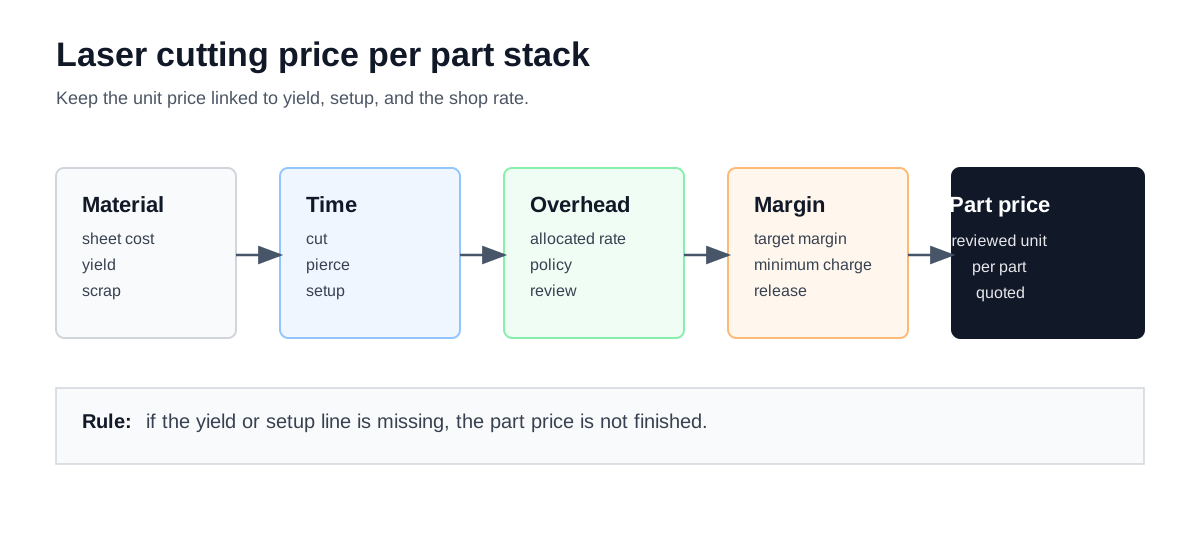
A per-part price is only useful when the packet shows which line came from material, which line came from time, and which line came from policy.
Symbol Trace
Keep the unit math explicit and unit-normalized:
| Symbol | Meaning | Source record |
|---|---|---|
| sheet_cost | Total cost of the sheet used on the job. | Supplier invoice or approved stock basis. |
| good_parts | Sellable parts recovered from the sheet. | Nesting record and yield policy. |
| machine_minutes | Cut, pierce, setup, and handling minutes. | CAM export, machine log, and setup note. |
| hourly_rate | Loaded shop rate used for the time block. | Hourly-rate model and accounting policy. |
| overhead_per_part | Allocated overhead for the batch, divided by units. | Overhead policy and batch quantity. |
| margin | Target gross margin used at release. | Pricing policy and reviewer signoff. |
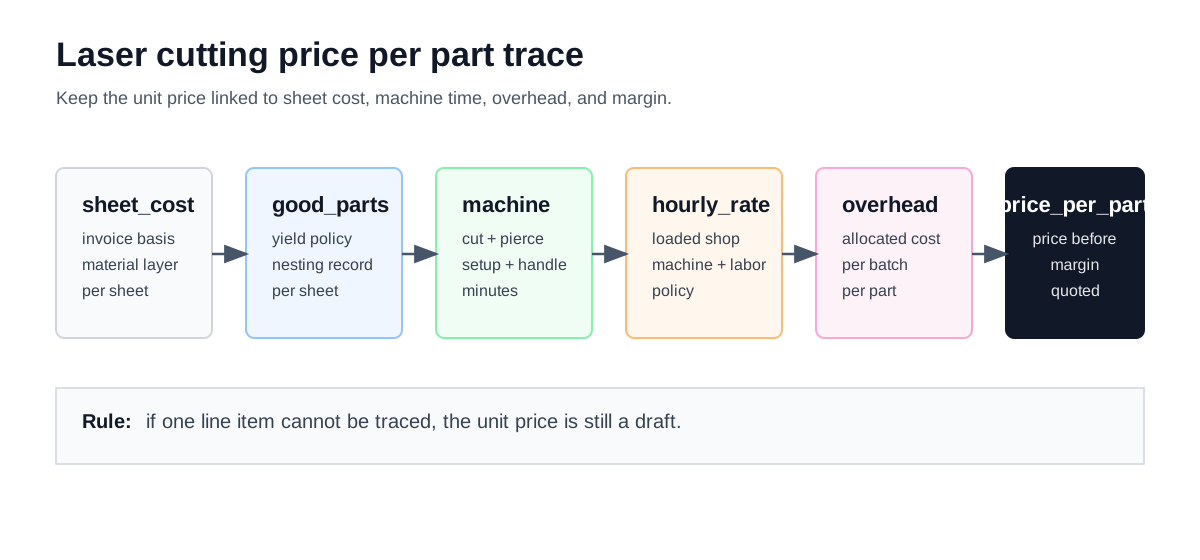
One line item should explain where each part of the price came from, or the unit price is still a draft.
Worked Trace
Use the same sequence for every quote:
material_per_part = sheet_cost / good_parts
process_cost_per_part = batch_machine_minutes / 60 x hourly_rate / quoted_quantity
price_before_margin = material_per_part + process_cost_per_part + overhead_per_part + direct_adders
price_per_part = price_before_margin / (1 - margin)
minimum_charge = release floor when the batch is too small for the unit price to be stable
The point is not to force every job into the same formula. The point is to make sure the estimator can explain where the number came from.
What Changes The Number
The per-part result changes when any of these change:
| Layer | What it controls | Failure mode if hidden |
|---|---|---|
| Material | Sheet cost, utilization, scrap allowance, and remnant credit. | The part price can drift away from the actual sheet basis. |
| Time | Cut, pierce, setup, and handling minutes. | The quote may understate the real machine load. |
| Rate | Loaded machine and labor cost per hour. | The price can double count or omit gas, power, or overhead. |
| Policy | Margin, minimum charge, and release authority. | The quoted number may be commercially wrong even if the math is right. |
When The Unit Price Misleads
Do not trust the per-part price in isolation when:
- the batch quantity is tiny;
- setup dominates the cycle;
- the sheet yield is weak or uncertain;
- scrap credit depends on a remnant policy;
- overhead is already inside the hourly rate.
In those cases, the unit price is still useful, but only as a review signal. The estimator should return to the packet and check the assumption that moved the number.
Review Gate
Before using the price per part in a quote, confirm:
- The drawing revision matches the packet.
- The batch quantity matches the setup allocation.
- Yield and scrap policy are documented.
- The hourly rate does not double count gas, power, or overhead.
- Margin is applied after the cost floor is visible.
If one of those checks fails, the price is not ready to send.
Source Boundary
LaserCalc Pro can compute the unit price and show the stack, but it cannot certify pricing policy or commercial risk. Use completed jobs, supplier invoices, machine logs, and internal review notes before treating the number as quote-ready.
Next Step
Review the scrap allowance and yield policy, the how-to-quote laser cutting workflow, and the full laser cutting calculator before release.