Set The Yield Policy
Scrap allowance is a policy, not a public average. The estimator needs to know when sheet value is written off, when a remnant can be reused, and what threshold makes the remaining stock worth keeping.
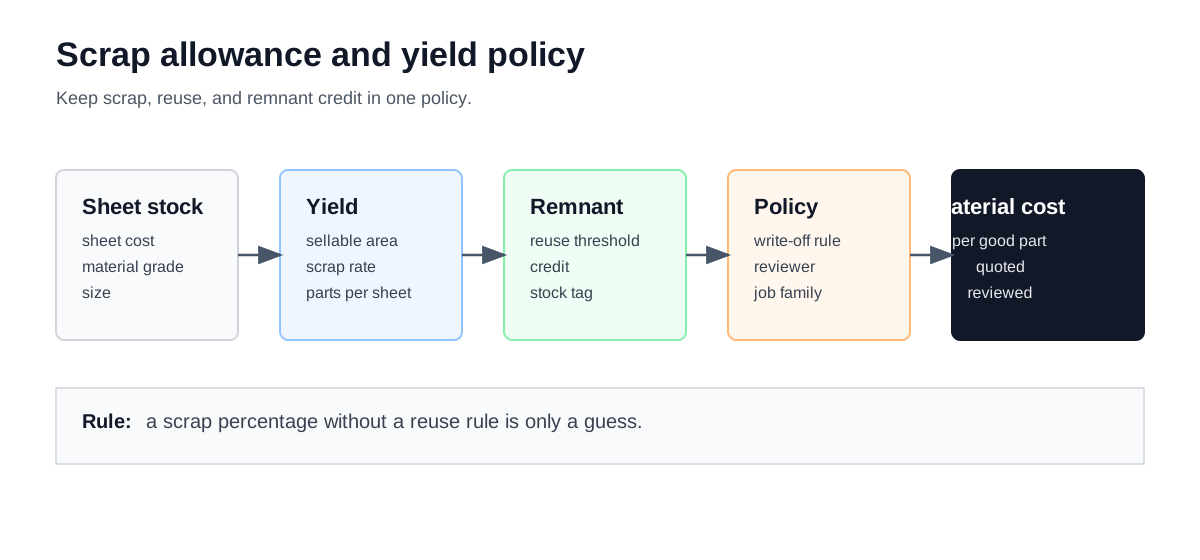
The policy decides how much sheet value stays on the job, how much becomes scrap, and when a remnant returns to stock.
Policy Blocks
Keep the policy in the quote packet:
| Policy line | What it controls | Evidence to keep |
|---|---|---|
| Gross yield | Sellable part area divided by the sheet area used. | Nesting record, sheet size, and part count. |
| Scrap allowance | How much sheet value is expected to be lost on the job. | Shop policy, customer rules, and remnant handling note. |
| Remnant credit | Whether an approved remnant lowers the effective material cost. | Remnant tag, stock policy, and reviewer approval. |
| Reuse threshold | When a leftover piece is worth keeping instead of scrapping. | Minimum usable dimensions and storage rule. |
| Reject handling | How damaged or unsellable parts are counted. | Quality note, rework policy, and customer requirement. |
Decision Tree
Use the policy as a branch, not a guess:
| Condition | Action | Evidence to keep |
|---|---|---|
| Tagged remnant meets reuse threshold and shop policy allows stock return | Return the remnant to stock and apply credit only once. | Remnant tag, storage rule, reviewer approval. |
| Tagged remnant does not meet the reuse threshold | Scrap the leftover sheet value for this job. | Minimum geometry note and job release record. |
| Customer-owned material or contract-specific stock rule applies | Follow the job note and do not auto-credit the remnant. | Customer instruction, contract note, and shop policy. |
| Rejects are unsellable or rework is blocked | Count the material as lost for this run. | Quality note, rework policy, and scrap log. |
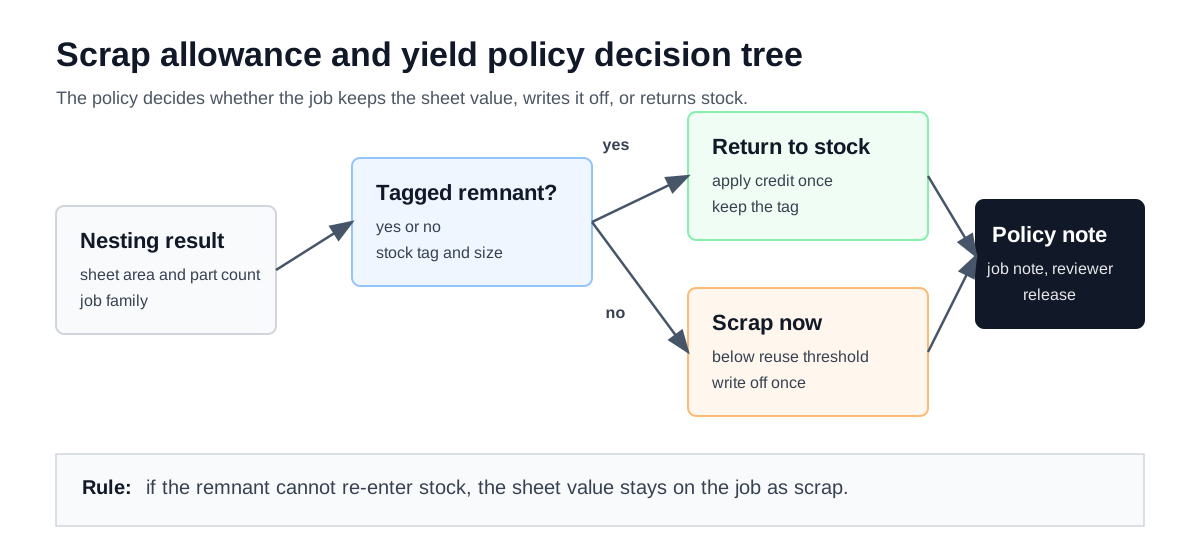
The policy decides whether the job keeps the sheet value, writes it off, or returns a tagged remnant to stock.
Formula Blocks
Use the simplest equations that match the shop policy:
Gross yield = sellable part area / total sheet area used
Scrap rate = 1 - gross yield
Good parts after reuse = parts sold + approved remnant parts
Effective material cost per good part = (sheet cost - remnant credit) / good parts after reuse
Remnant credit = applied only when a tagged remnant is allowed back into stock
The numbers only work when the same policy is used for the same job family. A public yield claim is not enough.
Keep The Policy Honest
Define these lines once and use them consistently:
- Full-sheet stock or remnant stock.
- Customer material or purchased stock.
- Scrap written off now or deferred to a remnant.
- Minimum geometry that still counts as reusable stock.
- Who approves the yield rule before a quote is released.
If the job family changes, the policy may need to change too.
What Not To Publish
Do not turn the policy into a public percentage table. Different part mixes, sheet sizes, and reuse rules can change the result enough that a single number becomes misleading.
- no fixed scrap rate for every job;
- no universal yield band;
- no public remnant credit;
- no public waste benchmark.
The estimator should use the policy to defend a quote, not to promise savings.
Source Boundary
LaserCalc Pro can record the yield policy and run the math, but it cannot invent a scrap allowance that fits every shop. Use shop policy, supplier invoices, remnant tags, CAM output, and completed jobs as the source of truth.
Review Gate
Before material cost enters the quote, confirm:
- the nesting result matches the quoted revision;
- the remnant rule is documented;
- the scrap allowance is written in shop policy;
- the yield assumption is shared with the quote packet;
- the per-part price uses the same material basis.
If any of those lines are missing, the material number is still a draft.
Next Step
Carry the same policy into material utilization, laser cutting price per part, how to quote laser cutting, and the full laser cutting calculator.