Laser Cutting Calculation Formula
A laser cutting calculation formula should read like a quote review, not like a single price-per-meter shortcut. The estimator needs to see which values came from the drawing, which came from the shop cost model, which came from supplier or utility records, and which values are still planning assumptions.
Use this formula stack before the number moves into the full laser cutting calculator:
Quote price = total modeled cost / (1 - target_margin_decimal)
Total modeled cost = material cost + process cost + setup cost + assist gas + power + allocated overhead
In this guide, process cost means the cutting and pierce time multiplied by the cost policy that the shop is using for the quote. Keep gas, power, maintenance, and overhead separate only when those lines are not already inside the loaded hourly rate. If a loaded rate already includes energy or overhead, do not add the same line again as a direct surcharge.
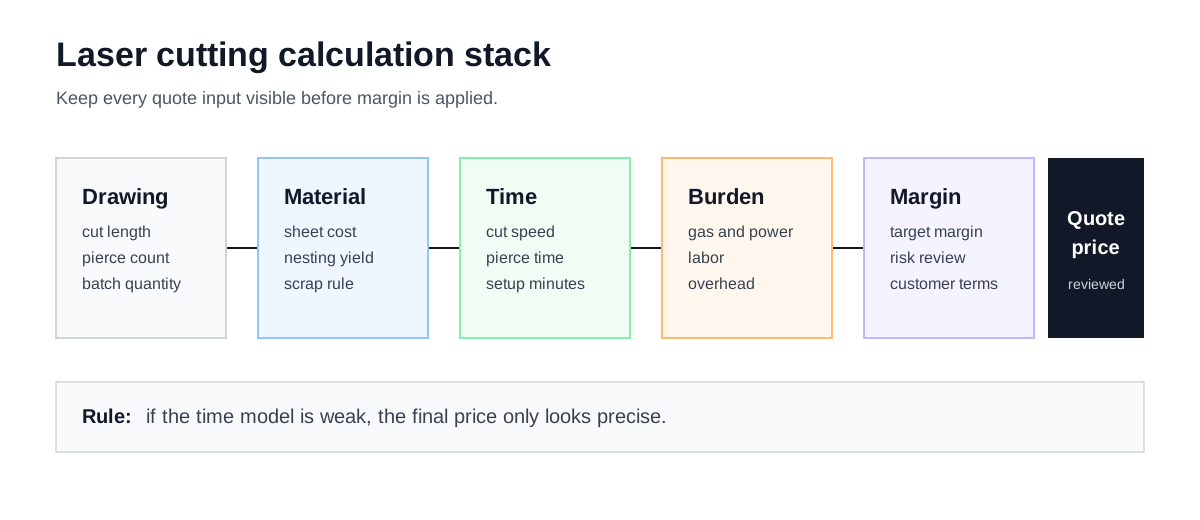
A quote-grade calculation keeps drawing data, machine time, consumables, overhead, and margin visible before a customer price is released.
Choose The Right Surface
Use this page when the question is how the laser cutting calculation should be sequenced before a number is trusted. The goal is to explain the cost stack. The guide should not replace the calculator or the Excel/PDF worksheet.
| Surface | Primary job | Stop there when |
|---|---|---|
| This calculation guide | Explain the quote stack and the order of inputs. | The estimator needs to defend the calculation logic before running tools. |
| Formula worksheet | Map fields into Excel, CSV, and PDF review artifacts. | The task is training, spreadsheet transfer, or worksheet download. |
| Full calculator | Run material, time, gas, power, overhead, margin, and export together. | The quote inputs are ready to calculate and review. |
Record The Input Source
Use the strongest available record first:
- Completed job record from the same shop and similar scope.
- CAM output, controller log, timed sample cut, or inspected first article.
- Supplier invoice, utility bill, machine cut chart, or reviewed accounting record.
- Editable planning placeholder that is marked before release.
The fourth source can keep a draft moving, but it should not become a quote-grade value until a shop record, source document, or reviewer approval replaces it.
Trace The Working Lines
The first pass is not about making the price look precise. It is about keeping every assumption visible enough that another estimator can challenge the row that moved the quote.
| Quote layer | Working formula | Record to keep | Review check |
|---|---|---|---|
| Material | sheet cost x sheets used / sellable parts | Supplier invoice, sheet size, nesting result, scrap rule. | The nesting and sheet count match the quoted revision. |
| Cutting time | cut length / effective cutting speed | CAM path length, cut chart, controller log, timed sample. | The speed belongs to the same material, thickness, gas, and edge requirement. |
| Pierce time | pierce count x seconds per pierce | Hole count, pierce routine, material, thickness, and strategy note. | Internal holes and skipped contours are handled consistently. |
| Setup | setup cost per part = setup minutes / 60 x setup rate / quoted quantity | Material handling, program load, first-article check, fixture change. | The setup batch matches the same quantity used in the price. |
| Allocated overhead | driver rate x job driver units | Overhead pool, driver base, job machine hours, labor hours, or material basis. | The line is not already inside the shop hourly rate. |
| Margin | total modeled cost / (1 - target_margin_decimal) | Pricing policy, risk review, customer terms. | Margin is applied after direct and allocated cost. |
Use A Packet Trace
Use a small packet trace to prove the structure before a live quote. The values below are a format check, not a shop benchmark.
| Packet line | Illustrative record | Reviewer check |
|---|---|---|
| Drawing | Revision letter, part count, material grade, thickness, and due date. | Sales and programming are quoting the same revision. |
| Geometry | CAM cut length, outside profiles, internal holes, pierce count, and etch lines. | Skipped contours, shared cuts, and optional marks are not mixed together. |
| Process | Assist gas, cut chart, effective speed, pierce routine, and quality requirement. | The process record matches the actual machine and edge requirement. |
| Batch | Quoted quantity, sheets used, setup minutes, handling time, and inspection step. | Setup and sheet count are allocated across the same lot. |
| Cost policy | Shop rate, overhead method, energy treatment, gas treatment, and margin rule. | No cost line is counted once in the rate and again in the direct quote. |
The packet is useful because a second estimator can point to the exact line that changed when the quote moved.
Prove Time Before Price
Time is the first input to audit because it drives machine cost, labor, assist gas, power, and overhead. The price can look precise even when the time model underneath it is still weak.
Start with the geometry:
- Confirm cut length from CAM output or drawing review.
- Separate exterior cuts, internal holes, etching, and optional secondary operations.
- Select an effective cutting speed for material, thickness, assist gas, edge quality, and machine condition.
- Add pierce time separately for hole-heavy jobs.
- Add setup, handling, inspection, and packaging outside pure cutting time.
Once time is credible, carry the same assumptions into the laser cutting time calculator or the full laser cutting calculator.
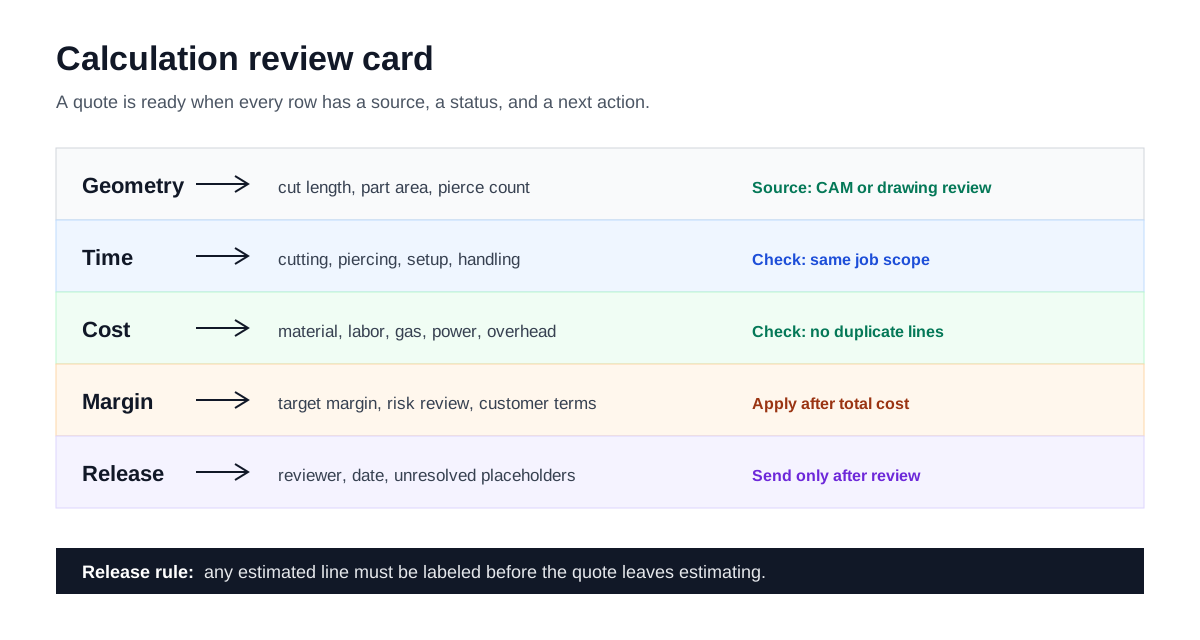
The review card has one line for geometry, one for time, one for cost, one for margin, and one for release status.
Keep Shortcut Prices In Review
A price-per-meter shortcut can help with a first look, but it should not replace the cost stack. It misses setup, material yield, pierce count, gas mode, labor policy, depreciation, overhead, and margin.
The same rule applies to overhead. Do not bury indirect cost inside an unexplained multiplier. If overhead belongs in the quote, document whether the driver is machine hours, labor hours, material value, floor space, equal split, or a separate accounting policy.
Public examples should stay as worksheet examples. Do not present a value from one sample, one vendor quote, or one region as a benchmark. A working number becomes quote-grade only after it has been checked against shop records, supplier invoices, utility bills, machine logs, and completed jobs.
Release Checks
Before the number leaves the estimating desk, confirm:
- The cut length came from the same drawing revision that sales is quoting.
- The pierce count includes internal holes, shared-line nests, and skipped contours.
- Setup is either charged separately or spread across the same batch quantity used in the quote.
- Assist gas, power, labor, maintenance, and overhead are not counted twice.
- Margin is applied after direct cost and allocated overhead.
- Every placeholder value is marked until it is replaced with shop evidence.
Move Into The Calculator
Build the calculation in this order: hourly rate, material utilization, cutting time, gas consumption, overhead allocation, then full quote price.